Optimal spatial development in 1930s school building
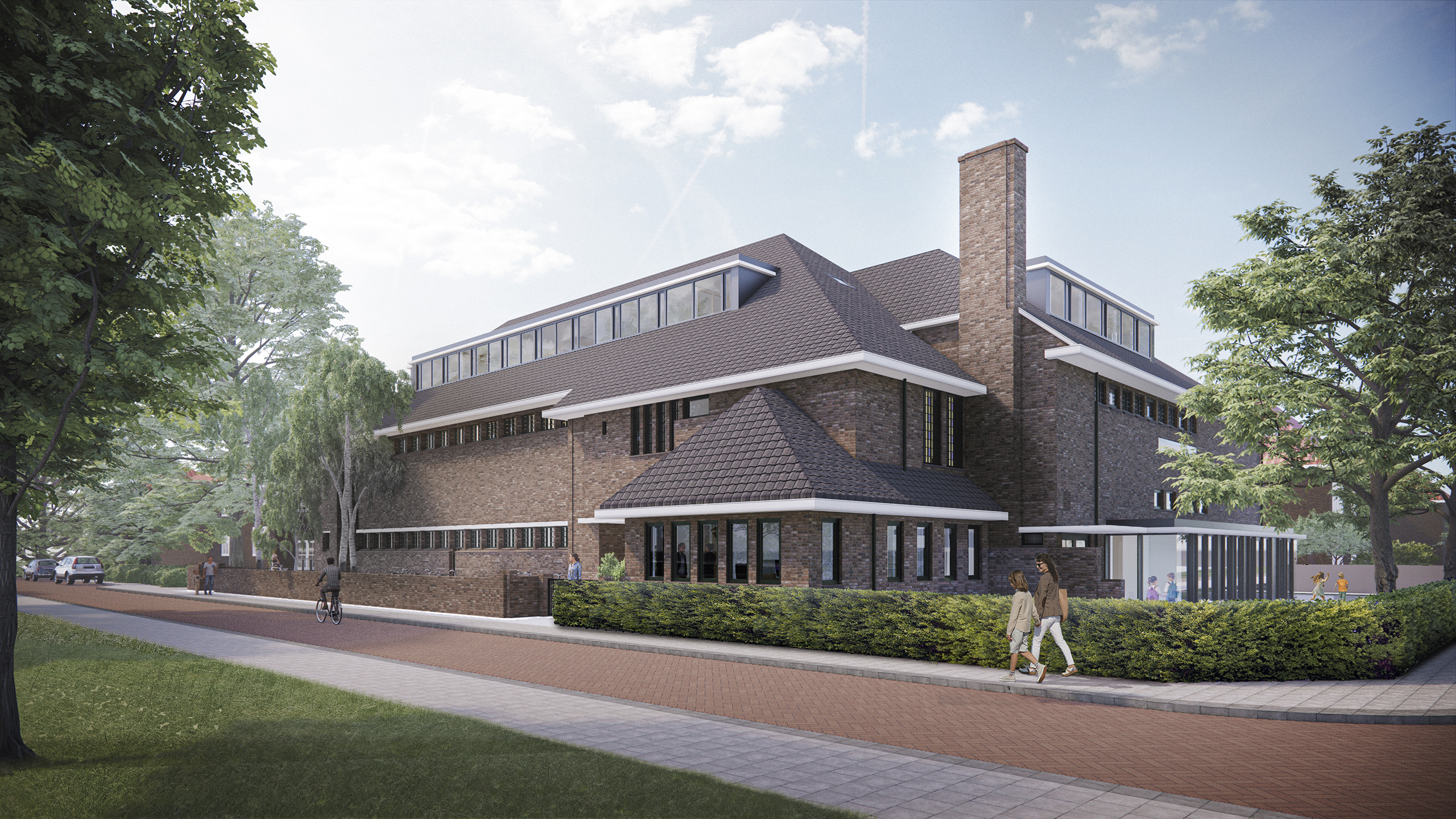
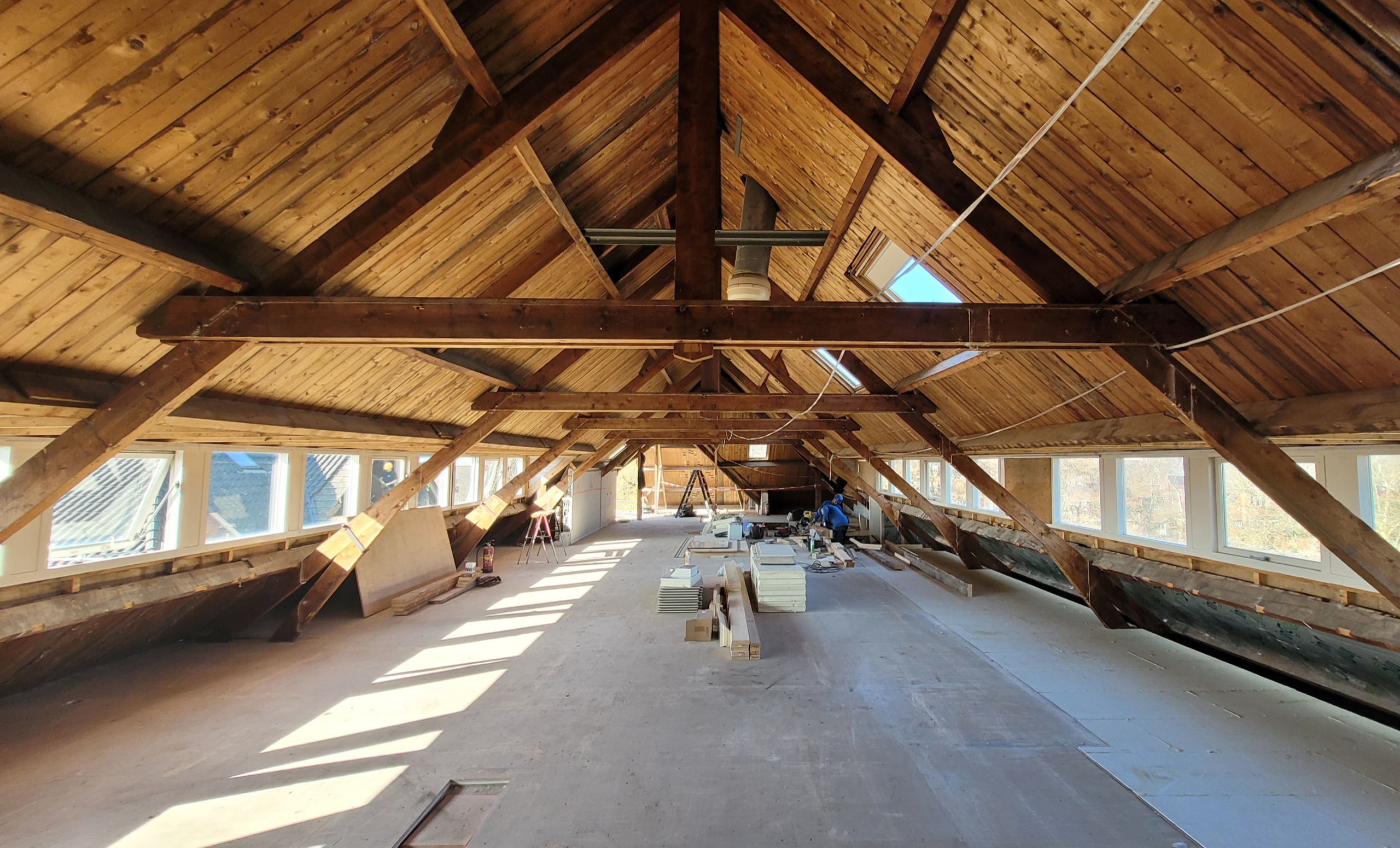
Children’s Centre De Vijverhof is housed in a beautiful, listed school building overlooking a lush, green pond in Voorburg. The building was designed in the 1930s by architect Albert van Essen following the characteristics of the Nieuwe Haagse School. In 1953, Van Essen designed an extension above the gymnasium. Since then, the school has undergone several further alterations by other architects. However, the layout of the building no longer meets the spatial requirements of contemporary education, and its energy performance and ventilation fall short of current standards.
DP6 designed a plan that enables the school to accommodate 25% more educational space without compromising its characteristic façade. Three extensions and several strategic openings enlarge the building, improving connectivity and bringing in more daylight. A thorough internal reorganisation creates a more open learning environment, with shared learning areas and improved spatial quality. In addition, the building will undergo a significant sustainability upgrade.
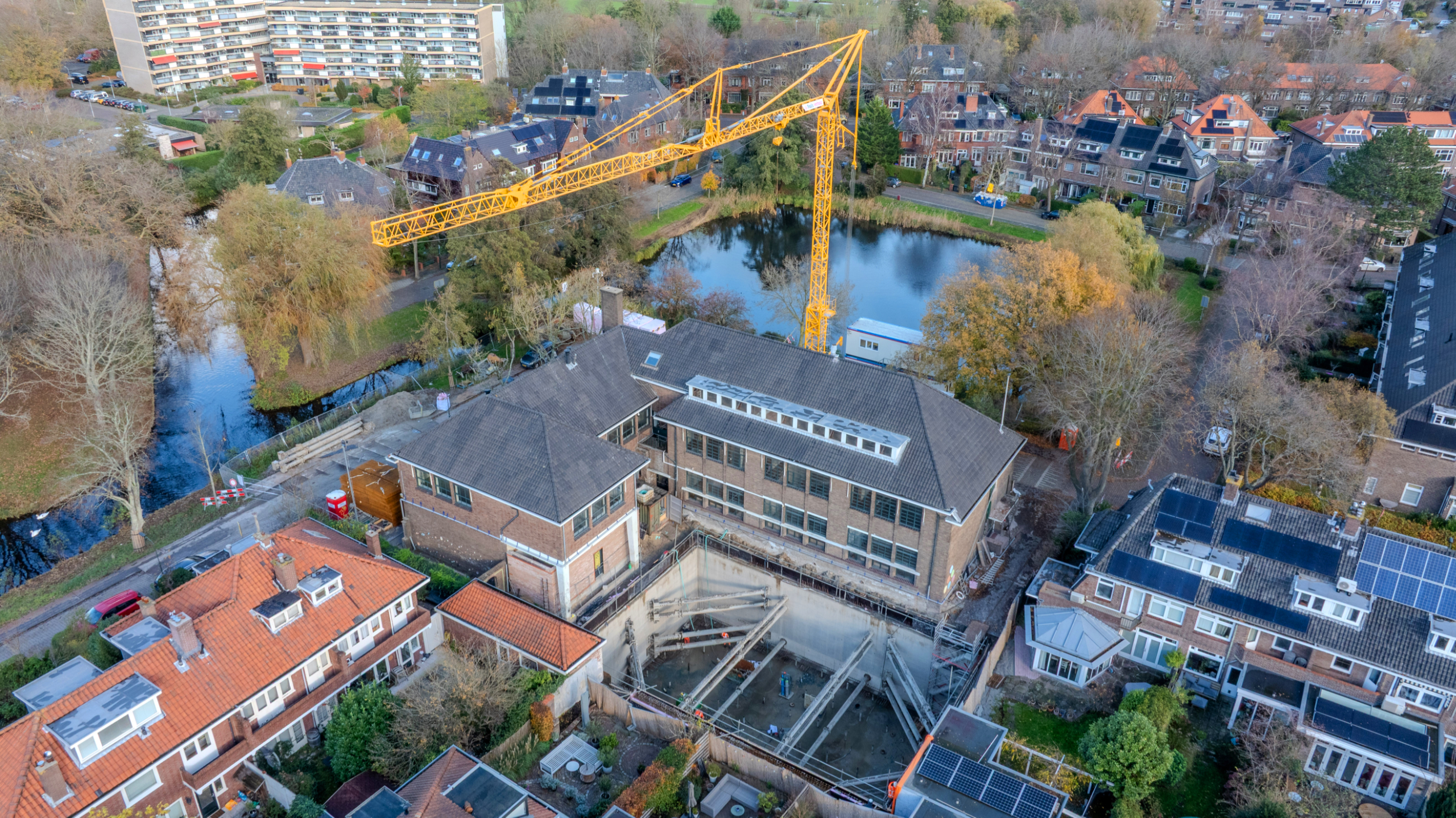
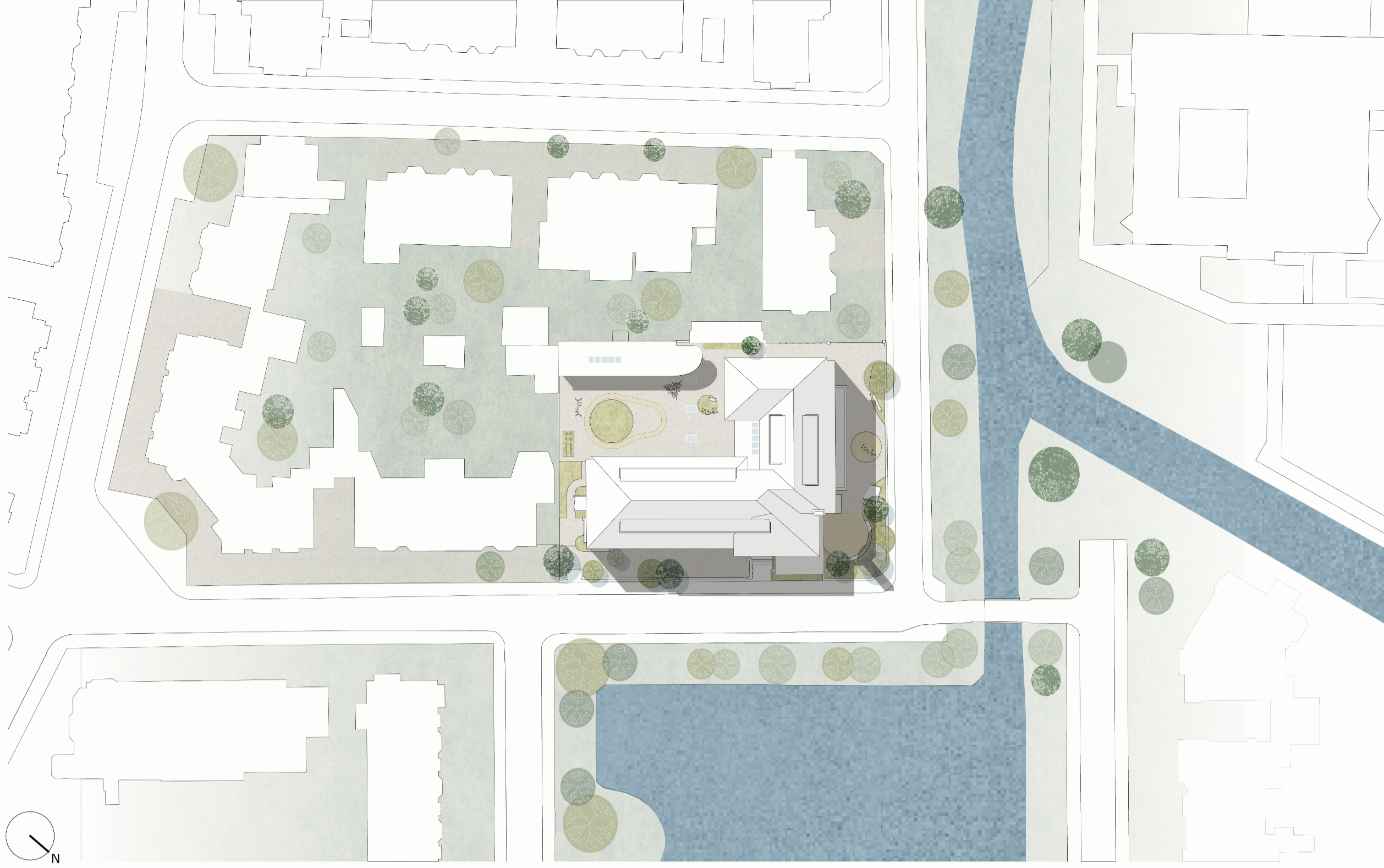
Children’s Centre De Vijverhof forms part of an urban block and is tightly enclosed by the gardens of surrounding 1930s housing and two streets. Providing the required additional educational spaces was a complex spatial puzzle: outdoor space is scarce, and preserving the building’s monumental quality was paramount, with the aim of altering the façade as little as possible.
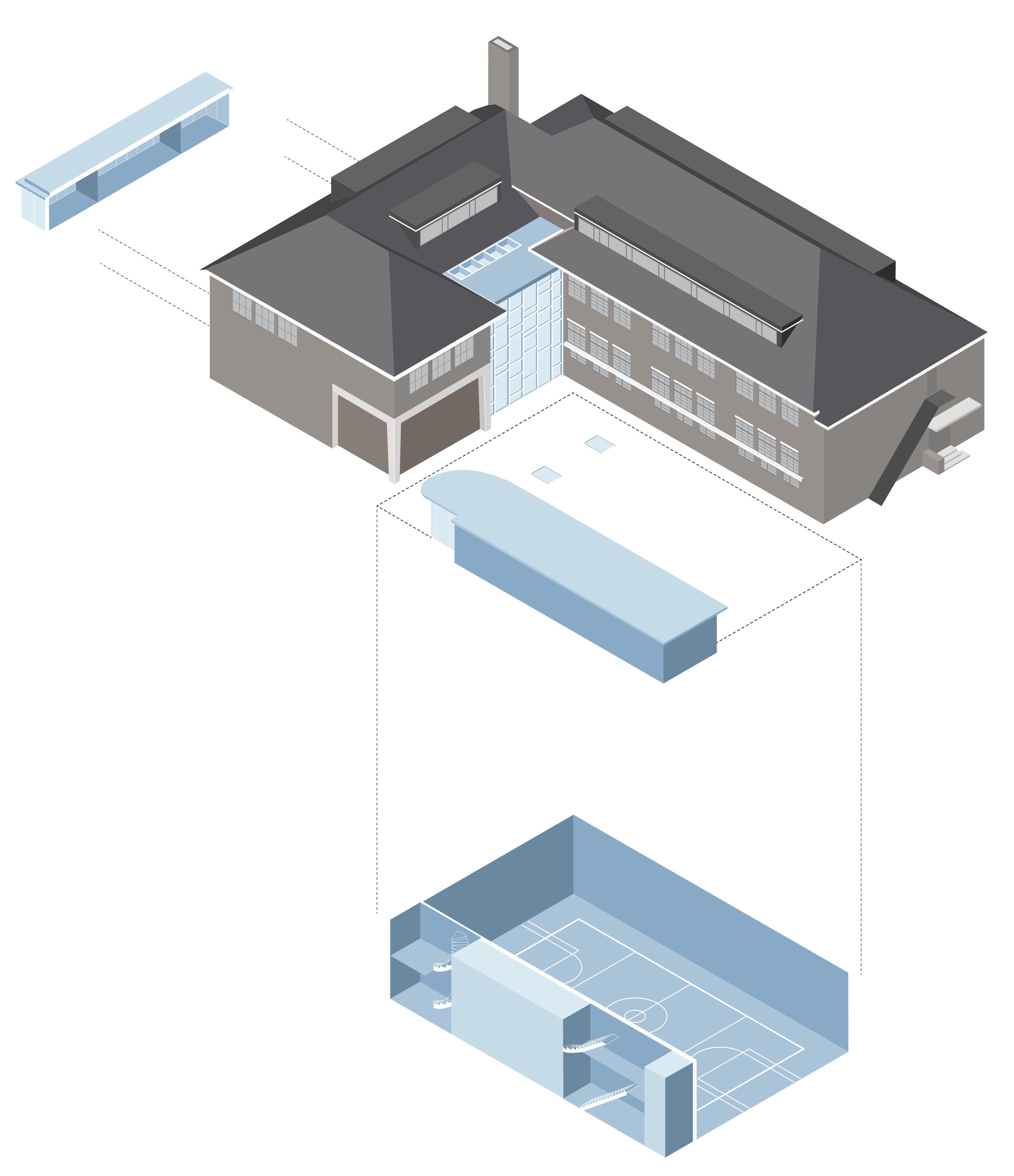
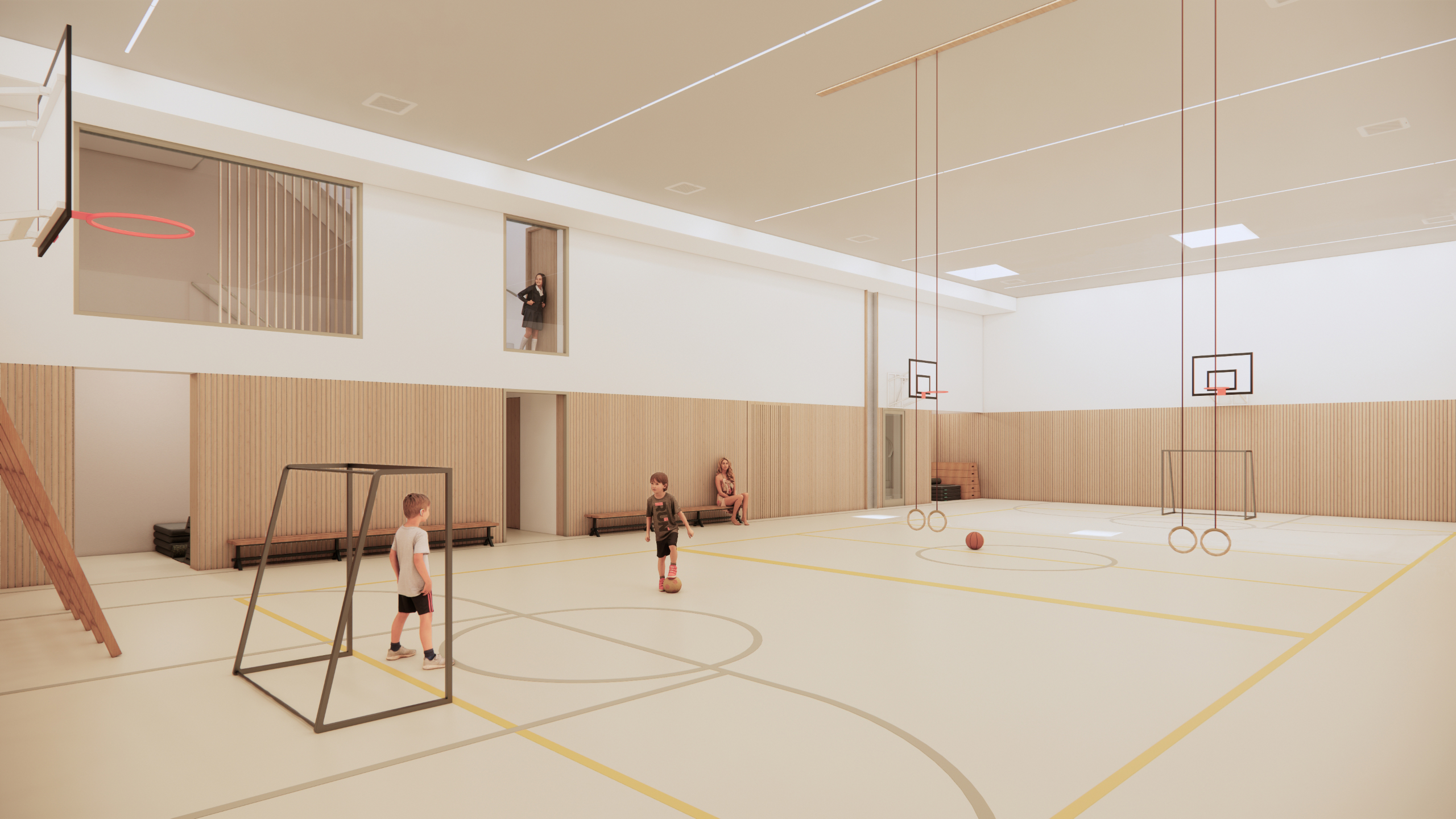
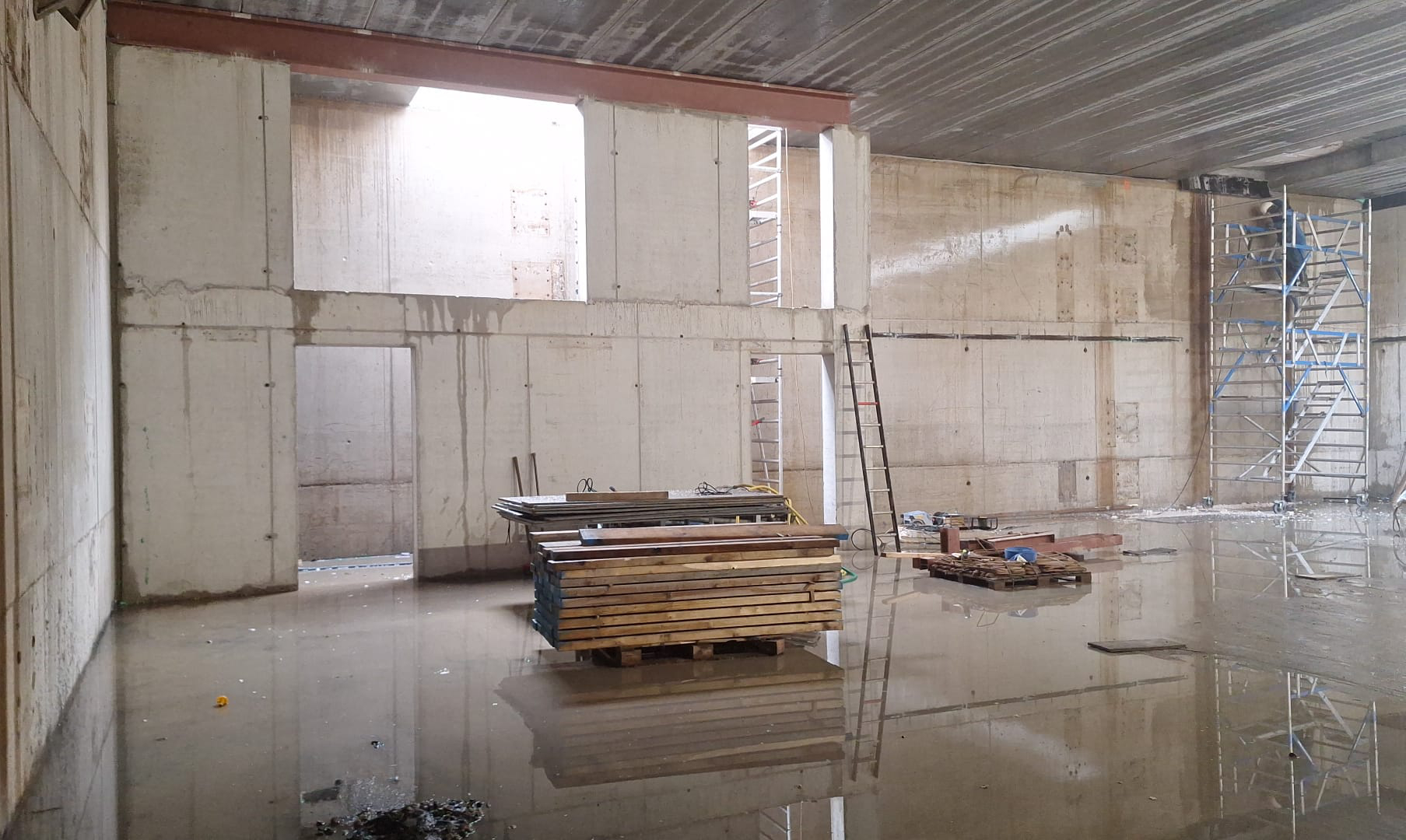
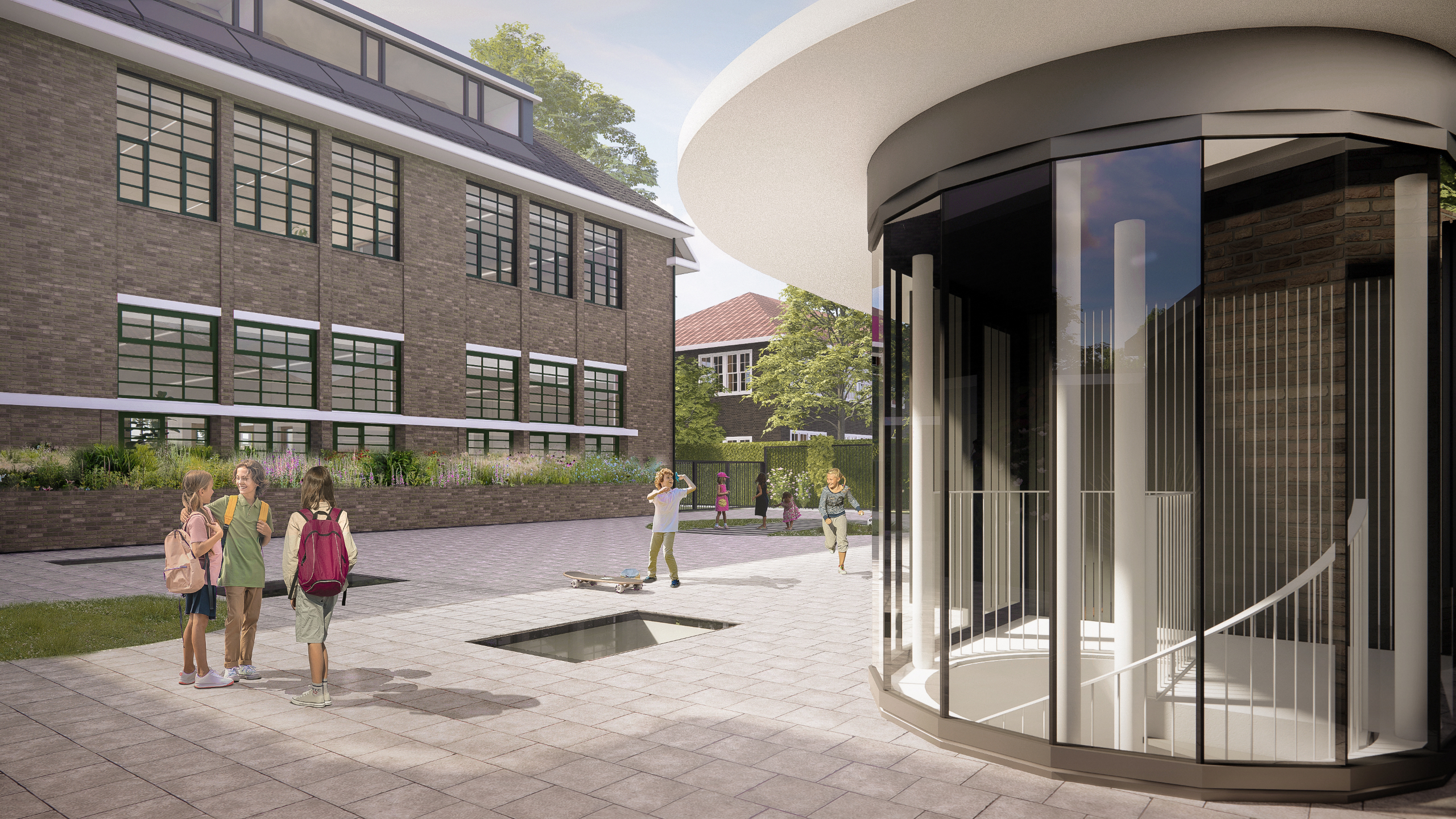
The school is extended in three locations: beneath the schoolyard, in the recessed inner corner of the building, and along the Veldzichtkade. Beneath the schoolyard, the new gymnasium is constructed, carefully fitted within the plot between the site boundary and the existing building. This underground sports hall receives natural light through three skylights embedded in the playground. As the gymnasium must remain structurally independent from the school building, access is provided via a separate pavilion that also accommodates external storage. This independent entrance has the added benefit that the gymnasium can be used by third parties outside school hours.
The second extension is located at the playground along the Veldzichtkade. Here, the currently closed façade, behind which the gymnasium is situated, is opened up and extended. This addition connects the educational space with the outdoor area and allows daylight to penetrate deeper into the building. The new windows are aligned in rhythm and materiality with the character of the existing façade.
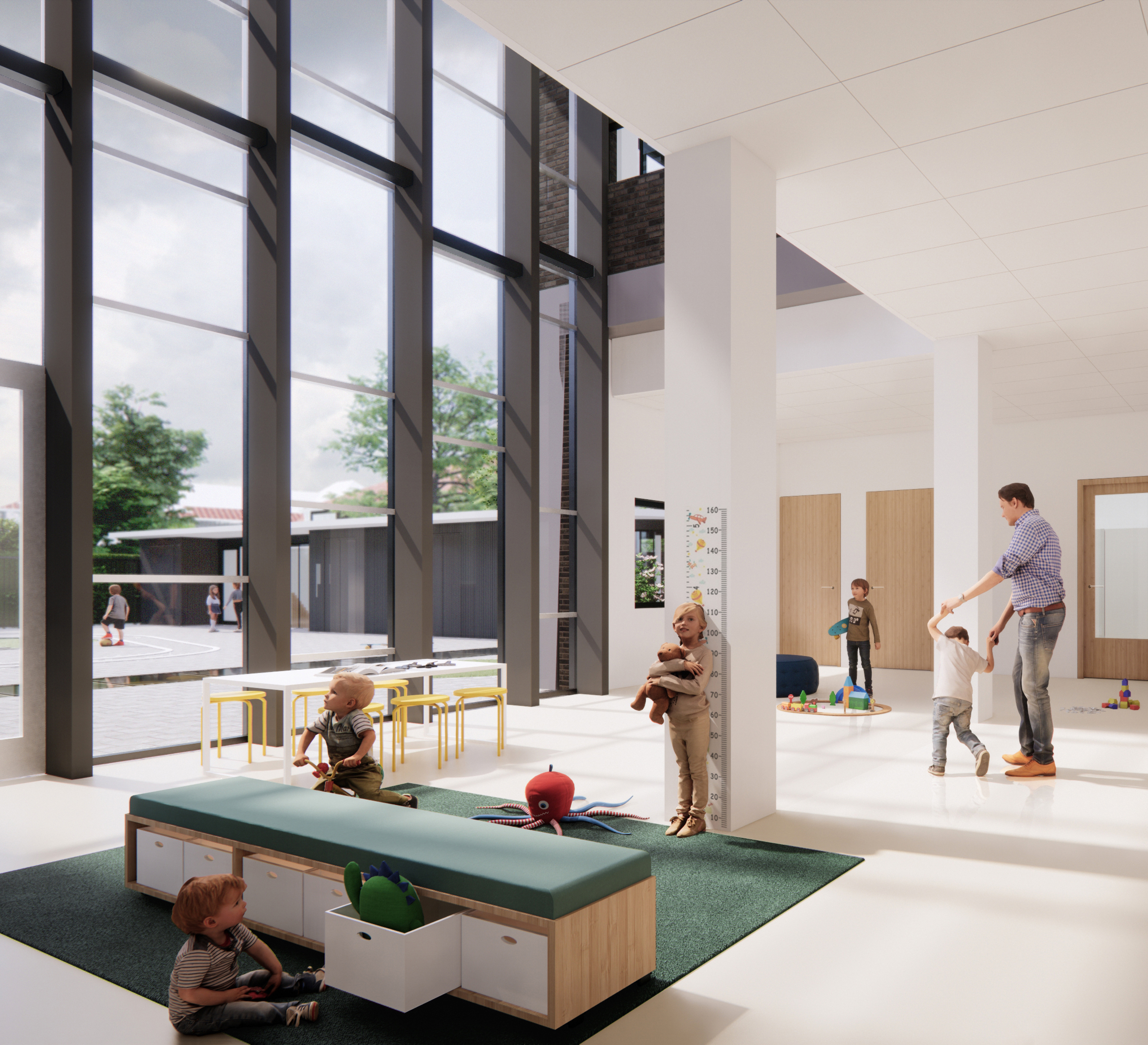
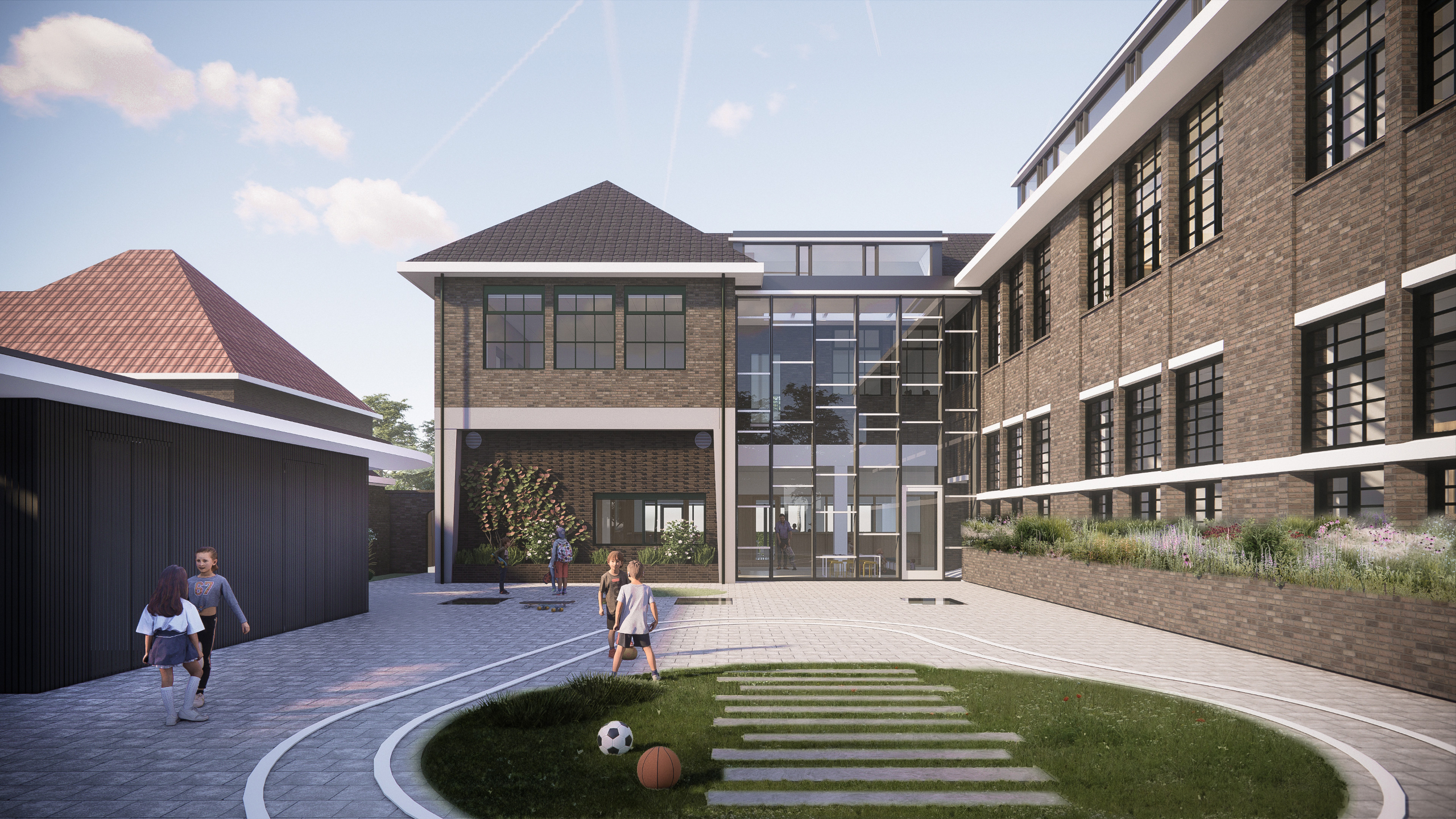
The third extension is situated at the rear of the building, where a double-height glazed volume is introduced to connect the different floors. On the ground floor, a shared play area is created, generously lit through the transparent façade.
Inside the building, new learning areas are introduced and connected to the classrooms through a series of openings. Distinctive interior features designed by Van Essen are preserved, including decorative mouldings with hooks for displaying drawings, stained glass, graphic tiled walls, and the characteristic stone letterbox.
-
Program
Renovation and extension of a children’s centre with primary school, day-care centre, after-school care and gym
-
Date
2022 - 2026 -
Surface (GFA)
2.200 m² -
Consultants
Pieters, Amsterdam
Iv-Bouw, Papendrecht
Techniq, Raamsdonksveer
DGMR, Den Haag
HI-Plus Bouwadvies, Rotterdam
iES bouwtechniek, Alphen a/d Rijn -
Execution
Cella Kelderbouw, Den Haag | Van Miltenburg, Utrecht -
Address
Vijverhof 7, Voorburg
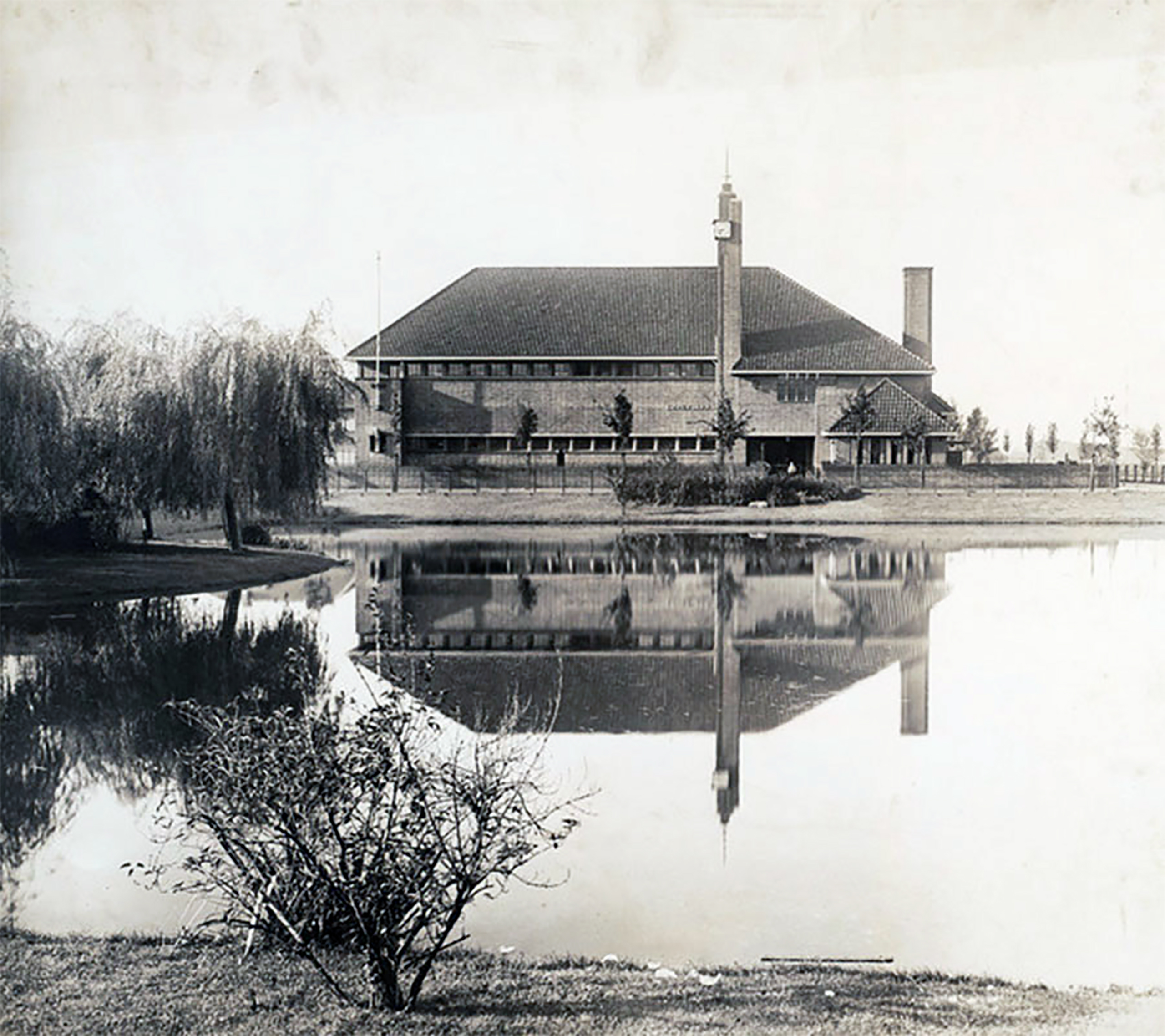
The school building shortly after completion in 1931